Christians nearly universally believe that their god never lies to them. He only tells them the absolute truth. In fact, he’s compelled by his nature to tell only the truth. But if he never lies to them, then they have a lot of hand-waving to do to rationalize away the constant failures of divine promises. Today, let me show you how they do it.
(This post first went live on Patreon on 8/18/2026. Please support my work—see the end of this writeup for options, and thank you for whatever you decide to do!)
SITUATION REPORT: The god who physically and literally cannot lie
Not long ago, I ran across a bunch of Christians claiming that their god can’t lie. Not doesn’t lie. Can’t, as in he physically and literally can’t lie. The idea intrigued me, because my time in Christianity was replete with times when it was obvious he’d assured us of things that didn’t actually happen. So I dove deeper into the claims.
Most claims rest on a couple of Bible verses, at least one of which gets commonly misunderstood. Christians think these verses mean their god can’t lie, ever:
Thus by two unchangeable things in which it is impossible for God to lie, we who have fled to take hold of the hope set before us may be strongly encouraged. [Hebrews 6:18, NIV, emphasis mine; most Christians leave out the context and focus on the bolded bit. See endnote for the context.]
God is not human, that he should lie, not a human being, that he should change his mind. [Numbers 23:19, NIV]
There are others, of course—about six in total that either claim that Yahweh cannot lie or that he never does. You can find them on the Skeptics Annotated Bible site, which also contains six verses that make crystal-clear that Yahweh can and does lie even to his own prophets. That last one comes from Ezekiel 14:9, and it’s confirmed in 1 Kings 22:20-23.
But Christians have a very bad habit of looking only at the verses in the Bible that fit their idea of what their god is like. I was no different! In fact, today was the first time I saw those two Bible verses about Yahweh (through his agents or “spirits”) deceiving his very own prophets.
Indeed, Christians get taught that their god never lies. And then, they’re taught how to hand-wave away all the times when that appears to be exactly what just happened. Today, I’ll show you the teaching and the rationalizations that must be part of it so it can survive even the faintest brush with reality.
I think they’re trying to convince themselves more than anyone else
In 2016, a poster wrote something on the BioLogos forums about why evangelicals like Creationism. BioLogos is a group trying to harmonize real science with the Bible to foil Creationists, and this poster had a good read on why Creationists keep rejecting real science:
I think the goal is to convince Evangelicals that God doesn’t lie. He doesn’t lie in his creation and he doesn’t lie in Scripture. There is consistent, coherent, truth that nature and Scripture both testify to, so if we are interpreting Scripture well and interpreting the natural world well, the testimonies will complement one another, not contradict one another. Not that we have some perfect harmonization nailed down yet, but we can still believe it’s out there.
In other words, a god who’d tell mistruths in his sourcebook about the origins of life might also tell mistruths about other things. Evangelicals are very all-or-nothing people, so they can’t endure the Creation myth being anything but a true accounting of exactly what happened. A mythic story about anything would mean their god is okay with not telling the straight truth about everything.
So even their omnimax god must have limits.
It’s not that Yahweh never lies so much as he literally can’t lie
In 2018, a young Christian insisted there was nothing her god couldn’t do—and her Sunday School teacher pulled her up short by showing her Titus 1:2. The verse says “in the hope of eternal life, which God, who does not lie, promised before the beginning of time.” About half the translations render “does not lie” as “cannot lie” or “never lies,” the last being what she read. To her, Titus 1:2 means “you can trust [Yahweh] implicitly.”
In 2019, another Christian surmised that his god doesn’t lie because he doesn’t need to lie to get power over others. He very wrongly claims that “we don’t lie to people who have no power over us,” which of course must mean that his god doesn’t lie to humans. He’s just so incredibly powerful, this god, that he “has no need to lie.” A 2020 post on Crosswalk echoes that sentiment, adding that humans can trust the Bible’s promises because of Yahweh’s complete inability to lie. And a 2021 post from Upside-Down Cross says the same thing.
There are more I could quote, but you get the idea. Hardline Christians of all types tend to push hardest on the idea, of course, because they use it to borrow divine authority for themselves. But you can find it everywhere in the religion. From Catholics to mainliners (and even progressives) to evangelicals, Christians insist that their god just can’t lie.
And yet, it moves: When the god who never lies seems to do exactly that
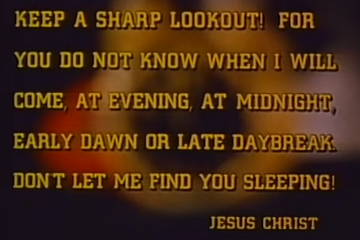
Despite that belief, my crowd and I often got “words from the Lord” that didn’t turn out the way they were promised.
In the early 90s, Biff claimed that Jesus had told him that if he moved to Japan in faith, then he’d be instrumental in sparking a nationwide revival there that would turn Japan into a majority-evangelical country. We did move to Japan in faith, but obviously no revival occurred.
When our church’s junior pastor, Daniel, got diagnosed with fast-moving cancer, we got countless prophecies claiming he’d fully recover. Obviously, he did not recover. He died miserably and in great pain a short time after diagnosis.
Biff and numerous other older men in our first congregation also said Jesus had told them I’d change my mind about never having children. Nope! Never happened.
Older congregants often said Jesus had promised them that they’d be Raptured before they died. They’d never die! One spry geriatric Irish gent repeated this promise often, and loudly. But like all of the others, he passed away without being whisked into the sky to meet Jesus right as the Endtimes got started.
And all the while and since, just as had happened for years beforehand, countless Rapture prophecies came and went without any Raptures happening. At the same time, we’ve been having fun around here reviewing prophecies to see how these self-proclaimed prophets did. (The Internet Monk actually did okay. But he didn’t characterize his thoughts as prophecies. He referred to them instead as predictions. That word acts as a pressure valve releasing steam.)
Luckily, we had indoctrination teaching us how to respond to all these situations.
The rationalizations we used only made things worse, really
First and foremost, we rationalized these letdowns as us having failed somehow. We’d failed to do something that needed to happen to make the promises work out. We’d rebelled somehow, disobeyed in some particular, and had fouled up the promise. It was like laborers who work for the promise of a paycheck. If they don’t work, then they won’t be paid.
So Biff blamed me for the Japanese revival not happening. Yes. Because I insisted we return home if we hadn’t found two full-time jobs within three months, I personally prevented that revival. (Don’t thank me all at once.)
Though plenty of Christian leaders counsel against this rationalization, you can find it everywhere in the sheepfold itself. But Yahweh’s power made leprosy vanish and limbs regrow from stumps. Such a god could also make sure his promises worked regardless. He hadn’t specified that IF we did this, THEN he’d do that.
Next, we could rationalize that the promise had failed because we’d misheard it. “Words from the Lord” didn’t come transcribed on golden plates. Humans easily misunderstood them. When Yahweh promised our church that Daniel would be fully healed, maybe he’d meant that would happen after Daniel died and went to Heaven. There, Yahweh would restore his body to perfect health. As Tom Yeakley tells us, if we only knew everything Yahweh knows, we’d understand better what his promises mean!
But a god who has that much trouble communicating doesn’t exactly sound omnimax. If he knows everything, then he knew exactly how we’d interpret promises like Daniel’s healing.
And as a fallback, we could rationalize that we’d mistaken the source of the promise. See, “words from the Lord” also didn’t come autographed. They could be demonic in nature, or “from the flesh/fleshly,” meaning the person had just imagined them. Demonic or fleshly “words from the Lord” could easily be false promises. As an example, Sarah Titus wrote movingly of having to “test the spirits” to make sure of the source of a promise.
But that leaves us with an omnimax god whose communications can be that easily confused with those from other sources. For example, Kris Reece characterizes false promises as “a wish, not a promise.” But that doesn’t exactly speak to the sheep always knowing the shepherd’s voice (John 10:27)!
If worse came to worst, then we had to do what Job had to do after many disappointments. He had to placate Yahweh, and so did we. We had to shut up and apologize for daring to criticize a god.
In the end, if Yahweh broke a promise, it was an “us” problem. It was never a “him” problem. As Steve Fuller wrote on Desiring God, disappointments mean valuing something more than Yahweh. How very dare we!
Big lie, little lie: Why authorities’ lies matter so much
Despite what that one Christian claimed, powerful people lie to the powerless all the time. In dysfunctional authoritarian systems (like we find in almost all hardline churches), the ability to lie freely is one of the perks of having power at all. Leaders in these systems lie because nobody can make them NOT lie.
Of course, lying to someone more powerful is a huge mistake—if the liar gets caught. But lying to the powerless carries no risks. Followers in these groups have no power to enforce rules. And no leaders will take another leader’s side on their behalf. These systems protect themselves.
So when they look at Yahweh, leaders and followers alike must believe that he never lies. If Yahweh lies about anything at all, then he could easily lie about other things too. Small lies easily open the door to bigger ones.
That’s why Creationists fight real science as hard as they do. If they can’t trust the Creation myth, then what else in the Bible might be metaphor or folklore or poetic allusion or even just scribes altering stories on the fly to appeal more to current-day audiences? And when it comes to obeying their leaders, how can those demands be trusted to be divinely-derived if Yahweh gets things wrong?
A lot is riding on Yahweh’s strict honesty! And I haven’t even gotten into the metaphysical implications today. Namely: If Yahweh can’t lie, then why don’t people worship whatever force prevents it? It sounds way more reliable!
Either this god is incompetent in communicating, or he’s not actually omnimax. Or, and hear me out, he doesn’t exist at all, so his followers are just making everything up as they go along. Yet again, his nonexistence turns out to be the best-case scenario. How strange!
NEXT UP: We review Christian prophecies about 2025. Curious about how they did this time around? See you soon! <3
Endnote: Hebrews 6 misunderstandings
In Hebrews 6:13-20, we see Paul (or whoever wrote as Paul) discussing Yahweh’s promises. He compares them to humans’ promises. When humans want to really make a promise stick, they swear by something greater than themselves. Yahweh must do the same thing, Paul argues, but nobody is greater than Yahweh. So when he made his covenant with Abraham, he effectively swore by himself. And similarly, Paul writes in verse 18, Yahweh has “two unchangeable things in which it is impossible for God to lie.”
According to Biblehub, the “two unchangeable things” are “God’s promise” and “God’s oath.” So Yahweh can’t lie because he said he can’t lie. He swears by him having said he can’t lie to make extra-sure his promises stick.
This circular reasoning is supposed to give humans hope in divine promises. Either way, even just taken at face value, Hebrews 6:18 doesn’t tell us he can’t ever lie, only that there are two things he can never lie about.
Please support my work!
Thanks for reading, and thanks for being part of our community! Here are some ways you can support my work:



0 Comments