We’ve successfully rounded the corner on another Christmas. This year, I heard disquieting murmurs from the Christ-o-sphere regarding the holiday’s ongoing secularization. Why, some churches even skipped their Sunday services! But they did it for a good reason. For centuries, the reason for the season had nothing to do with Christianity. In the past few decades, Christians’ attempted stranglehold on Christmas has receded further with each bit of dominance lost by their tribe. Now, finally, people are embracing the real reasons for the season.
Let’s take a closer look at how England and America shaped and changed the celebration of Christmas—and how religious and secular influences have sought to reshape the holiday.
How Elizabethan England celebrated Christmas
When I began studying Elizabethan history some years ago, one of my first surprises involved their celebration of Christmas. It didn’t look much at all like how modern Americans handle it.
Some elements were similar, of course. They decorated their homes with winter greenery (but not trees) and ate a hearty feast on Christmas Eve. But they didn’t give each other presents. Not then, at least.
Starting on December 24th and lasting to January 6th, called Twelfth Night, rulers appointed a Lord of Misrule to preside over their festivities. During his reign, Henry VII also appointed an “Abbot of Unreason” to go with his Lord of Misrule. He paid them both £5 for their time.
Whatever their titles, these temporary lords presided over feasts, dances, caroling, gambling, concerts, and yet more feasting. On January 1st, Elizabethans finally gave each other gifts. Usually, gifts took the form of something thoughtful and small, like a bit of ginger or oranges stuck all over with cloves. Of course, high-end nobility, like Elizabeth I herself, expected their subjects and peers to do way better than that!
The fun ended for a while in the 1640s when super-religious zealots in Cromwell’s parliament made these celebrations illegal. In 1660, the English Restoration eventually swept away those hated anti-Christmas laws. Parties went back on the menu in very short order.
How Victorians celebrated Christmas
As the 1700s gave way to the 1800s, Victorians took many of their holiday cues from their queen. They were a much more sappy and sentimental folk than the Elizabethans of centuries past. They treasured harmony, family, grace, and elegance. Not for them, Lords of Misrule and Abbots of Unreason! Instead, they closed ranks around their family units and made those the reason for the season.
The English had long treasured feasts, singing, and decorations. Now they simply considered them more for families than entire courts.
And the Christmas tree finally pinged their cultural radar. Germans had enjoyed their Christmas trees for a while. So when the German-born Prince Albert married Victoria, he brought that charming custom with him. In 1848, someone drew a popular newspaper illustration of her entire family assembled around a decorated, candle-lit Christmas tree loaded with little gifts, fruit, and candies. The trend took off very quickly, as did a new invention from the same year: Christmas crackers.
Over the next few decades, Christmas day itself began to take on more and more importance. It’s not surprising at all that gift-giving moved to that day around that time. Also, roast turkey began to be the fashionable meat to serve at the feast. (Henry VIII had been one of the first rulers ever to eat this newfangled meat as part of a Christmas dinner, but it slowly trickled down to the middle class over the next few centuries.)
Cultures more tightly controlled by Christian leaders celebrated Christmas in more overtly Christian ways
England’s almost-entirely-secular Christmas alarmed its religious zealots, but those zealots didn’t get their way except for a couple of decades in the 1600s. I’m sure a lot of the development of Christmas as a more-secular holiday happened in reaction to the control-grabs of those zealots.
But in other cultures that Christian leaders did control more tightly, Christmas had way more religious overtones. In Renaissance Florence, people started their celebrations on December 24th, and these lasted until January 6th. So far, so good. They decorated their homes with citrus fruits, not evergreen boughs, feasted, and created nativity scenes.
(Francis of Assisi is credited with creating the first one in 1225. It was a live nativity scene. Apparently, his intention was to remind people that the whole point of Christmas, in Christian belief, is to celebrate the birth of Christ, not the giving of gifts and enjoyment of festivities!)
As a reflection of their more religious leaders, Florentines spent the nine days leading up to Christmas performing the traditional Catholic rituals of the Novena. On January 6th, called Epiphany, wealthy city rulers like the Medici dressed up as the Three Wise Men and rode in procession around town, which they called the Cavalcade of the Magi.
In a lot of ways, the Catholics ruling over Florence were always trying to put out secular fires around Christmas.
How it started vs. how it’s going
For decades now, various Christian leaders have been trying very hard to push their religious rituals as the so-called reason for the season. They have sought all this time to convince people that without an overtly Christian ritual focus, Christmas itself might as well not be celebrated at all.
The best they’ve been able to manage is making Catholics think that attendance at Christmas services is non-negotiable. They can attend Christmas Vigil, which happens very late on Christmas Eve and tips over past midnight, so it can be considered technically December 25th. Or they can attend on actual Christmas Day itself. My mom always attended Vigil, because she wanted to celebrate the big day itself with the family (and my dad never wanted to attend church with us, ever).
Even my super-religious Catholic grandmother did the same thing every year. Attending Christmas Vigil was always a big tradition for Mom’s entire side of the family. (The next day, we’d enjoy Grandma’s feast, which always included her brown-gravy variant of creamed spinach.)
But Protestants really don’t have any such similar tradition.
For them, Christmas celebrations generally happen the Sunday before the holiday. Churches may also offer a grand Christmas pageant on the day itself, but usually they blow their wad doing that on Christmas Eve. As far as I’ve ever seen, neither service is mandatory like they are for Catholics. Still, according to Lifeway Christian Resources, a subgroup within the Southern Baptist Convention (SBC), Christmas Eve services in Protestant churches tend to be very well-attended. In fact, according to Lifeway’s study, Christmas Eve attendance tends to be exponentially better attended when compared to Christmas Day itself!
So overall, this arrangement works just fine for Protestants—as long as Christmas doesn’t actually fall on a Sunday.
Then, in 2016 and again this year in 2022, Christmas fell on a Sunday.
Whoops.
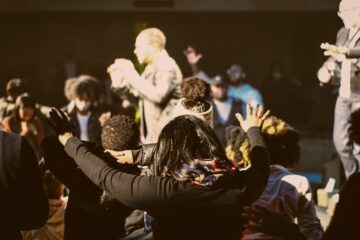
The shocking spectacle of churches canceling Christmas services!
In 2016, Kevin DeYoung wrote a passionate plea to evangelical pastors on The Gospel Coalition (TGC). He asked them not to cancel Christmas services.
He’d apparently just learned that a small number of pastors did intend to do exactly that. And more planned to do the same in 2022. Indeed, Lifeway ran surveys on both years. In 2016, only 89% of responding pastors had decided to run services on Christmas Sunday. In 2022, even fewer pastors, 84%, said they’d planned to open for business that day.
Of course, that’s still an overwhelming number of pastors who planned to hold Sunday services. But 11% in 2016 and 16% in 2022 had decided not to run services on Christmas Sunday!
And Kevin DeYoung did not like that fact at all.
No, not at all.
A plea to stay open on Christmas Sunday that makes a lot of mistakes
In his plea to pastors, Kevin DeYoung mentions five points, all of which are refuted by evangelicals’ own research:
- “Most people will come back. . . Most people will still come to church on Christmas.” Lifeway’s studies already tell us this is false. Only a fraction will. DeYoung also claims here that most families will not hold, instead, “meaningful, thoughtfully prepared do-it-yourself service at home,” so will require a pastor to do the job right. I think he’s vastly overestimating evangelical families. More likely only one or two in a large church will go to that trouble, for reasons I’ll explain in a minute.
- “Visitors will be looking for a place to worship… They may venture into your church on Christmas out of habit.” Again, Lifeway already told us this isn’t true.
- “Family is a gift, not a god.” In other words, religious devotions are mandatory, so a family’s observances of holidays should be of secondary importance. Alas, evangelical leaders have never managed to convince the flocks of this idea. For decades, church attendance has steadily tanked even among fervent evangelicals. Evangelicals in particular tend to consider their families long before their church communities, if their estate planning behavior is anything to go by.
- “It’s Christmas for crying out loud! … Don’t we want to sing? Don’t we want to celebrate?” But again, evangelical flocks have long demonstrated that no, actually, they’d rather not.
- “It’s Sunday for crying out louder! … I’m enough of a Puritan to think that December 25 is a Sunday before it’s Christmas.” I’m sure we’re all shocked that a pastor, who gets paid by those attending their church, might insist repeatedly that church attendance is a serious obligation.
In the end, DeYoung begs pastors to be there and open the doors on Sunday, even if only a very few people show up, and even if they’ve already decided to print church schedules based upon their decisions.
But in his pleading, he makes a mistake that is common in his end of Christianity. He’s not the one who has to wrangle volunteers and programs and perks for attendees, nor the one who must pay staff or have after-services refreshments for the flock. He pays exactly none of the price that pastors must pay if they heed his advice. However, he does reap the social rewards if they take his advice.
In a lot of ways, he’s already reaped those rewards simply by gaining recognition as That One Pastor Who Begged Everyone to Stay Open on Christmas Sunday. After all, The New York Times linked to him in their recent story on the topic!
Why so many Christians skip church on Christmas Sunday
Many, many centuries ago, Catholics ruled Christianity and so many countries imposed Christianity upon their subjects by force of violence or law. And Christians themselves decided that the reason for the season was a celebration of life right at the lowest ebb of sunshine in the year.
Every culture, it seems, has a tradition of some similar celebration right around the same time of year. Indeed, Washington Post tells us that the link between Jesus’ birthday and December 25th occurred very, very late. Around the 4th century, quite a few early Christians believed that his birthday was on January 6th. By the century’s end, Catholic leaders had adopted December 25th as the big day.
And they adopted this particular date specifically to co-opt pagan festivals that took place on the same day:
It was a custom of the heathen to celebrate on the same twenty-fifth of December the birthday of the Sun, at which they kindled lights in token of festivity. In these solemnities and festivities the Christians also took part. Accordingly when the doctors of the Church perceived that the Christians had a leaning to this festival, they took counsel and resolved that the true Nativity should be solemnised on that day and the festival of the Epiphany on the sixth of January.
Washington Post, quoting an early Christian writer from Syria
Of course, Washington Post goes on to tell us, later Christian and secular rulers alike had to periodically trample pagan outbursts around the holiday.
The reason for the season has always been very human indeed. Christians’ attempts to co-opt the holiday for their own god’s worship have never been either certain or complete.
So when faced with celebrating a very important holiday with their families that conflicts with their already-deteriorating feeling of obligation to attend church, many families will opt for the former rather than the latter.
But church leaders have a far more pressing problem on their hands than even this conflict:
What happens when we take religion out of Christmas?
A long time ago, a commenter made an observation that stunned me. She pointed out that if you take religion out of Christmas, nothing changes. Celebrants still:
- Sing carols, some of which are religious but never get sung at other times of the year
- Attend and hold parties
- Spend time with extended family and friends
- Exchange presents
- Decorate trees and hang decorations around the house
- Hold special feasts full of foods that don’t appear on the table at any other time
- Send special cards to each other
- Watch Christmas specials on TV or attend pageants of various kinds
Not one of the traditional customs of Christmas alters in the least.
But if we take those customs out of a religion-focused Christmas, we get:
- A church service
- Religious songs
- A sermon to sit through with its associated usual Sunday customs
- Maybe refreshments afterward
In other words, we get a regular church service that doesn’t look very different at all. As DeYoung himself observed, it’s just a regular Sunday before it’s Christmas.
Aside from Kirk Cameron’s cringey and completely pseudo-historical attempts to shove untrue religious meanings into Christmas’ secular customs, there just isn’t much about Christmas that speaks to Christian beliefs. Christian leaders like DeYoung and Cameron must work hard to artificially inject their religiosity into Christmas, because Christians themselves have ensured that with each passing century the holiday gets more and more secular in nature.
But the problem goes a lot deeper than just what focus Christmas may have:
Why Christian leaders like Kevin DeYoung have made a stand on a religious Christmas
As I mentioned a bit ago, very religious-dominated cultures have had a tighter focus on religious observances during the Christmas holidays. But cultures that have drifted away from religious dominance tend to revert quickly to more secular holiday customs.
Really, we’ve always been just a light-switch flip away from pure paganism when it comes to our end-of-year holidays, which requires endless and steadfast action and vigilance on the part of the Christians holding (or seeking to hold) power over us.
So in a lot of ways, the level of Christians’ control over Christmas reflects their overall level of cultural dominance in a given society. The more secular the holiday is, the less cultural dominance its Christians hold, and vice versa. And the less that society’s people focus on religion during Christmas, the more easily they discard religion at other times.
Naturally, then, the more authoritarian among them will be very distressed at the idea that even their own flocks will skip Christmas Sunday services. They’ll be even more distressed at the notion of pastors not even holding those services. They know what these decisions mean, and they know this truth better than any non-authoritarians ever could. It’s why their leaders concocted the cynically-engineered moral panic they call “the War on Christmas” in the first place. They’re trying to engineer a collision between secular Christmas celebrations and their religious demands.
In years past, that strategy might have worked better. But now, even those who largely buy into evangelical demands are disobeying in this area.
In deciding not to hold services on Sunday, one Evangelical Lutheran Church in America (ELCA) pastor, Laura Bostrom, said that she “lead[s] with love” in matters like these. Instead, her church made a half-hour-long video for people to watch on Christmas Day. It contains hymns and cute vignettes of church members sharing brief Christmas sentiments. It’s quite charming! I watched it and couldn’t help smiling ear to ear as it progressed.
And I’ll bet you a fancy doughnut that more authoritarian evangelical pastors like Kevin DeYoung would snidely dismiss Bostrom as a fakey-fake fake Christian. Fine. She’s still got way more Christmas spirit than he does. Whether he likes that fact or not—and he just might love it—she definitely doesn’t flunk Jesus’ Greatest Commandment, and he does. Whoops.



5 Comments
jfnavin · 02/11/2024 at 11:24 PM
It was in a church in Munich that I saw him, a balding heavyset man in a gray overcoat, a brown felt hat clutched between his hands. People were filing out of the basement room where I had just spoken, moving along the rows of wooden chairs to the door at the rear.
It was 1947 and I had come from Holland to defeated Germany with the message that God forgives.
It was the truth they needed most to hear in that bitter, bombed-out land, and I gave them my favorite mental picture. Maybe because the sea is never far from a Hollander’s mind, I liked to think that that’s where forgiven sins were thrown.
“When we confess our sins,” I said, “God casts them into the deepest ocean, gone forever.”
The solemn faces stared back at me, not quite daring to believe. There were never questions after a talk in Germany in 1947. People stood up in silence, in silence collected their wraps, in silence left the room.
And that’s when I saw him, working his way forward against the others. One moment I saw the overcoat and the brown hat; the next, a blue uniform and a visored cap with its skull and crossbones.
It came back with a rush: the huge room with its harsh overhead lights, the pathetic pile of dresses and shoes in the center of the floor, the shame of walking naked past this man. I could see my sister’s frail form ahead of me, ribs sharp beneath the parchment skin. Betsie, how thin you were!
Betsie and I had been arrested for concealing Jews in our home during the Nazi occupation of Holland; this man had been a guard at Ravensbrück concentration camp where we were sent.
Now he was in front of me, hand thrust out: “A fine message, fräulein! How good it is to know that, as you say, all our sins are at the bottom of the sea!”
And I, who had spoken so glibly of forgiveness, fumbled in my pocketbook rather than take that hand. He would not remember me, of course–how could he remember one prisoner among those thousands of women?
But I remembered him and the leather crop swinging from his belt. It was the first time since my release that I had been face to face with one of my captors and my blood seemed to freeze.
“You mentioned Ravensbrück in your talk,” he was saying. “I was a guard in there.” No, he did not remember me.
“But since that time,” he went on, “I have become a Christian. I know that God has forgiven me for the cruel things I did there, but I would like to hear it from your lips as well. Fräulein”–again the hand came out–“will you forgive me?”
And I stood there–I whose sins had every day to be forgiven–and could not. Betsie had died in that place–could he erase her slow terrible death simply for the asking?
It could not have been many seconds that he stood there, hand held out, but to me it seemed hours as I wrestled with the most difficult thing I had ever had to do.
For I had to do it–I knew that. The message that God forgives has a prior condition: that we forgive those who have injured us. “If you do not forgive men their trespasses,” Jesus says, “neither will your Father in heaven forgive your trespasses.”
I knew it not only as a commandment of God, but as a daily experience. Since the end of the war I had had a home in Holland for victims of Nazi brutality.
Those who were able to forgive their former enemies were able also to return to the outside world and rebuild their lives, no matter what the physical scars. Those who nursed their bitterness remained invalids. It was as simple and as horrible as that.
And still I stood there with the coldness clutching my heart. But forgiveness is not an emotion–I knew that too. Forgiveness is an act of the will, and the will can function regardless of the temperature of the heart.
“Jesus, help me!” I prayed silently. “I can lift my hand. I can do that much. You supply the feeling.”
And so woodenly, mechanically, I thrust my hand into the one stretched out to me. And as I did, an incredible thing took place. The current started in my shoulder, raced down my arm, sprang into our joined hands. And then this healing warmth seemed to flood my whole being, bringing tears to my eyes.
“I forgive you, brother!” I cried. “With all my heart!”
This is a Christmas story, a Christmas gift, from Betsie, Mr. ten Boob and Corrie,
jfnavin · 02/18/2024 at 10:10 AM
You’ll be thrilled to know that the number of Christians in india just doubled.
jfnavin · 02/19/2024 at 2:44 AM
Pakistan. My error.
jfnavin · 02/19/2024 at 1:35 PM
Christmas, to me, is not one day out of the year. I celebrate His birth all the time. Who cares what the date is when He was actually born? He Was Born. That’s the whole point of Christmas. A tiny little baby was born and He Was God! It’s been a while since I came to believe that and I still get goosebumps.
The ERLC firing puts the 'fun' into Southern Baptist dysfunction - Roll to Disbelieve · 07/29/2024 at 4:01 AM
[…] he even criticized the eternal evangelical war on the war on Christmas! In addition, Moore didn’t think conversion therapy worked. And he tried to counsel SBC […]