In a recent op-ed, evangelical pastor Jamie Strickler wonders why Christians don’t act like demons are real. It’s a fair question to ask, too. If Christian claims are true, then obviously demons must also be true. In fact, they should be plentiful! Since Christians ostensibly believe Christian claims, why don’t they act like they believe one of the religion’s central claims?
Today, I’m feeling helpful. So we’ll explore that very question to see if we can’t just find this poor confused pastor a few answers.
(This post and its audio ‘cast first went live on Patreon on 11/10/2026. They’re both available there now. Please support my work—see the end of this writeup for options, and thank you for whatever you decide to do!)
SITUATION REPORT: This pastor really thought he was doing something with this post about demons
Sometimes I see an evangelical post with such an obvious answer that I’m surprised it got written in the first place. This one was no exception. Written by Jamie Strickler, it’s titled “Your Bible is full of angels and demons. Why do we read it as if it isn’t?”
In the post, Strickler sweeps through examples in the Bible about demons and people’s stated beliefs in demons. He points out that the writers of the Bible took for granted that demons exist and meddle in human affairs. Then, he laments that modern Christians just don’t seem to care anymore about demons.
Oh, but don’t worry, he does try to cover his religion’s ass somewhat by reassuring readers that some stuff might not be demons after all. But they all need to start thinking in terms of demonic interference so they’re as similar to ancient Jews and the earliest Christians as possible. It will, he promises them, enrich their experience of Christianity in several key ways—none of which are likely to happen even if they take his advice, which I doubt they will.
But the more I thought about the question, and the more I learned about why this particular evangelical was asking this particular question in the first place, the more interesting his post got. So today, let’s journey into the ancient past, meet the people who invented many of these demons, and find out why their spiritual descendants don’t seem interested in maintaining that belief anymore.
Everyone, meet Jamie Strickler, the guy who devotes his life to the existence of demons
The writer of today’s OP (original post) is Jamie Strickler. He pastors St. Paul Evangelical Lutheran Church in Otis, Colorado. Otis sits at the northeast corner of Colorado, out in the middle of nowhere. As of 2020, Wikipedia says it boasts just over 500 people. But if the “St. Paul Lutheran Church” on Google Maps is his church, then it’s a very pretty, well-maintained red brick building that dwarfs the neighboring homes. It likely enjoys a modest attendance in the under-50 range. It competes against two other churches (Baptist and Presbyterian) for those attendees.
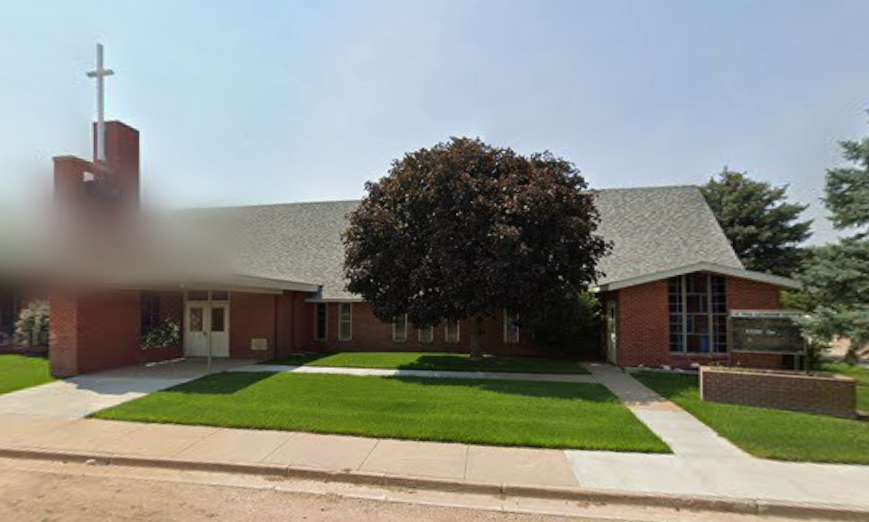
Strickler and his wife also host a podcast called Heavy Theology. It frequently discusses demons, of course. And for what I’m unironically sure are very reasonable fees, he offers services that include “spiritual cleansings” that he assures us will “break the bonds of spiritual oppression.” It sounds more like exorcisms, but I can see why he doesn’t want to use that extremely loaded word.
His education appears to be a Th.D. (Doctor of Theology) from Kairos University, a small but accredited generically-evangelical school in South Dakota. I get the feeling he did it remotely, because that’s a big emphasis of their Doctor of Theology program. His Th.D. research involved Second Temple Demonology, which we’ll get into here in just a minute.
Basically, this guy’s entire continued existence depends on demons being real.
Why Christians need to adopt the thinking of ancient Jews and the earliest Christians concerning demons
To be sure, this isn’t the very first time a Christian leader has chided the flocks for not Jesusing like their notion of “original Christianity.” It’s a beloved idea in evangelicalism, this idea that the very first Christians got the religion completely right, while successive generations of Christians keep muddying its ideas more and more over time. It betrays a signal misunderstanding of the actual history of the religion, but it’s just so persistent. Even in the 1980s, I got caught up in the belief. Since then, it’s only gotten stronger.
Jamie Strickler buys into the same belief. In his post, he writes:
The story [2 Kings 6] never argues that an unseen world exists. It assumes it. So does nearly everything else in Scripture.
Yet many of us read the Bible as though that assumption was embarrassing. Angels become poetic symbols of God’s providence. Demons become first-century names for mental illness. The devil becomes a figure of speech for human evil. We keep the moral lessons and quietly edit out the cast.
Then we get some Bible verses from the Old Testament alluding to “the unseen world” of demons: The accusing angel in the Book of Job, Psalm 82 with its “divine council” of gods, a demon apparently waylaying a messenger in Daniel 10, and a vague allusion in Deuteronomy 32 that doesn’t specifically mention demons (which Strickler nonetheless describes as “especially striking”). In the New Testament, we get a few more allusions and even a specific description from Jesus about Satan falling from Heaven.
SEE? DEMONS! DEMONS EVERYWHERE!
In his OP, Strickler asserts that without a firm belief in the reality of demons, these Bible references “lose their meaning.” He takes it as read that this loss of meaning would be very bad, but he doesn’t particularly offer any solid, concrete, objectively measurable outcomes of such a loss. It just would be, okay?
Why re-adopting a belief in demons “matters now”
This subsection intentionally left blank because he never actually explains it.
The sales flow of demon belief
The last subsection of Strickler’s OP is literally called “why this matters now,” but he never reveals that. Instead, he tries to sell his package of beliefs.
Once he’s (sort of) established that it’s super-bad to lose belief in demons and that re-adopting that belief is important, Strickler moves smoothly across to describing why everyone in the tribe should do so. Amusingly, he uses part of an upselling technique called features -> advantages -> benefits, or FAB, but he does it poorly.
In FAB salesmanship, sellers describe the features of their product. They describe what advantages the features grant to buyers. And then they describe the benefits those advantages confer.
In the case of a red stapler, here’s how the sales flow looks:
- [Feature] This stapler is bright red.
- [Advantage] Its color stands out in every office situation, while regular black or gray ones easily get lost.
- [Benefit] You’ll never waste another minute looking for your stapler!
But in this case, here’s how the flow looks:
- [Feature] This belief package contains actual real demons.
- [Advantage] Adopting this package of belief restores prayer habits, sharpens discernment, and gives hope.
- [Benefit] You’ll feel like prayer actually does something! You’ll have two routes of helping sick people, the magical and the real! And you’ll feel like your god is actually doing something about all the dangers in the world!
With the red stapler, the advantage flows naturally from the feature description. That is not the case for the demon belief package. Strickler never explains exactly how or why the package inspires more prayer, provides better “discernment,” or gives hope. All he’s offering here is an augmented worldview—a framework for understanding events and situations. Figuring out how that worldview/framework leads to his proposed benefits is left as an exercise for the reader.

However, his benefits list is even more laughable. (And I know I’m responding to them out of order, but I’m doing it for a reason. Bear with me.)
Examining the benefits of a belief in demons, starting with increased prayer
Firstly, I’ve never noticed any greater tendency to pray on the part of demon-believing Christians. They complain about inadequate prayer habits as often as any other Christians might. Deep down, they clearly know that prayer doesn’t do anything miraculous at all. Even I realized that about my own practice of prayer.
If it confers any benefits, they only extend to the praying person. And people who pray might enjoy benefits simply because it’s a fairly meditative, introspective quiet time practice.
But evangelicals can’t have just a nice self-improvement quiet time of meditation. No, no! They need a red Bat-Phone to the god of the cosmos. Alas for them, the more they hype the nonexistent miraculous effects of prayer, the less most Christians will do it.
Adding demons to literally anything only makes it harder to find solutions
Secondly, adding demons to the possible-causes list of any situation only makes solutions more difficult to find. For example, I developed a nuclear-grade case of post-traumatic stress disorder (PTSD) while I was Christian. If you don’t know anything about PTSD and you start experiencing some of its more dramatic symptoms, it can be absolutely terrifying. The list includes such solid-gold hits as superimposed “ghosting” images and auditory hallucinations, intrusive thoughts, feelings of dread and panic that come out of nowhere, and all sorts of other stuff.
So you can imagine that Strickler’s CYA messaging made me downright peevish. He writes:
A biblical worldview does not mean seeing a demon behind every headache. [. . .] A pastor who takes the unseen world seriously will send a suffering person to both the altar and the doctor.
He’s flat wrong. There is no world wherein “the altar” makes any mental illness better, nor any physical one. Demons, angels, and gods do not sign their handiwork, so literally anything someone feels or experiences can come from any of those sources—along with a fourth source, the flesh, which is Christianese for a purely natural source.
Priming me to interpret PTSD symptoms as evidence of demons guaranteed me a hellish experience. But that far-right end of Christianity only encourages those interpretations. The ghosting and auditory stuff becomes supernatural sightings and demonic whispering. So do the intrusive thoughts and feelings of anxiety. My religious leaders taught me to shine those feelings on instead of encouraging me to fix the wellspring of the illness causing them.
Eventually, I got properly diagnosed by a secular psychiatrist, started on temporary meds to even myself out, and entered real, evidence-based therapy to fix my problems. Thanks only to that real-world treatment, I have gone over 20 years without any serious symptoms.
Of course, it’s certainly possible for someone to get pastoral care at “the altar” at the same time as real help. It’s just that the further rightward one frolics in evangelicalism, the more lopsided the division of care gets—and the less effective, and the more exhausting. And I’m not the only person who used the term “exhausting” (archive with bad formatting) to describe the results.
Belief in demons does not lead to hope, but to its opposite
Thirdly and perhaps even worse, though, I never noticed any greater amount of hope in demon-believing Christians than in those who rejected the belief.
Demon-believing Christians suffer from addictions, mental illnesses, a serious lack of hope or feeling of meaning/purpose in their lives, anger problems, and everything else that everyone else suffers from. Maybe even more of them do. They just hide all of it behind masks of SPEERCHUL WARFARE (spiritual warfare). Instead of getting real help for their problems, they pretend that Jesus was helping them fight all of these huge battles. Sheer euphoria carries them the rest of the way home—or at least, it does often enough to reinforce the beliefs needed.
I don’t need to mention, either, that Yahweh has always been infamous for ignoring almost all of his followers in times of great crisis. Now that I’m deconverted, I see now that having a capricious god who might or might not help me was far worse than not having one at all. Instead of relying on divine help that might or might not arrive, I can find real-world solutions that actually work.
I really think this guy Strickler is falling into that big, characteristic mistake that evangelicals always make nowadays: Assuming that perfectly correct beliefs always lead to perfectly correct behavior. They have no other roadmap that might lead from “Point Conversion” to “Endpoint Ideal Behavior.”
And now, the really interesting thing about the OP: Second Temple Demonology
As I said, Strickler’s way into Second Temple Demonology. I didn’t see that in his bio on Christian Post, but it’s all over other bios of his online.
Obviously, the Old and New Testaments were written by people who lacked a lot of our modern knowledge about the world. They ascribed mental and physical illnesses to demons, thought gods got offended enough at people’s disobedience to flood the planet and wipe out cities with fireballs, didn’t realize the Earth orbits the Sun, and had some really odd ideas about land plants being divinely created before animals.
(In reality, of course, animal life evolved way before land plants did. Not only does Genesis 1 have land plants created first, but they’re created before the very Sun that they’d have needed for photosynthesis.)
So people back in those days would obviously have had a strong framework for understanding things as demonic, angelic, or divine.
But like all religious beliefs do, Judaism itself shifted and changed over time. By the time of the Second Temple of Jerusalem (which lasted from its building around 500 BCE to its destruction in 70 CE), Judaism was undergoing serious changes. First Temple Judaism had looked a lot more like other contemporary religions, especially the Baal worship the priests condemned. Second Temple Judaism began to look more ceremonial, urban-dominated, and ritualistic—and, of course, way more monotheistic!
It was this period that—as Marko Marina has pointed out—directly led to the creation of the very character of Jesus, the attempted reformation of Judaism, and the relatively quick emergence of Christianity as an offshoot of it when that attempt failed.
Second Temple Judaism’s proliferation of demon lore isn’t the win that Strickler really wants it to be
Strickler’s written some interesting stuff about “the origin of demons,” though not for the reasons he clearly thinks it’s interesting. Demons, like Hell itself, have a history. And the more one learns about that history, the less real the idea starts to sound.
(Obligatory tag for the Journey into Hell series! Yes, we did the math!)
I was surprised to find this paper as interesting as it is. I was ready to find out he was a blithering idiot, but I was pleasantly surprised! Indeed, Strickler deep-dives into a bunch of Jewish sources to explain that Second Temple Jewish leaders drew from the Book of Enoch to describe demons.
Then he describes early Christian leaders like Justin Martyr (whom we’ve talked about), who used those ideas to firm up and expand Christian mythology about demons. He may overreach with the importance of Enoch to that body of mythology, at least in my opinion, but overall it’s a good and interesting read.
It’s just too bad that he only vaguely gestures at all that scholarship in the OP, only to make a hard right turn into standard-issue evangelical babbling.
He frog-marches some very interesting ideas into parroting very typical evangelical-fundamentalist talking points. Weirdly, he sees the post-Second Temple and early-Christian proliferation of demon lore as evidence that demons are totes for realsies, instead of what it obviously is: Retrofitting false beliefs about demons into increasingly fragmented and syncretistic religious traditions.
Now let’s bring it all home: Why Christians act like demons aren’t real
Strickler’s OP asks a plaintive question: Why do Christians read the Bible as if it’s not full of angels and demons?
And now, here’s the answer he seeks:
Because explanations that work tend to last. Explanations that don’t work don’t tend to last. Demons fall into that second category, that’s all.
To work, explanations need to have explanatory and predictive power. They must be falsifiable (ie, we must be able to prove them false). Their predictions need to be objectively true.
Demons, as an explanation, do not actually explain anything better than natural explanations do. They cannot be falsifiable. There’s no way to objectively include or exclude demons from any situation or phenomenon. They cannot be objectively measured or evaluated in any way whatsoever. Instead, natural explanations do the job just fine without injecting imaginary stuff into the mix.
Demons, as an idea, have zero predictive power either. Nobody can predict just what a demon will do or refrain from doing. They can bring success or failure, can help or harm, and can even whisper suggestions that sound extremely compatible with what Strickler calls “a biblical worldview.” (That just means a worldview he personally agrees with.)
People tend to be pretty pragmatic, when push comes to shove
Strickler, of course, wrote the OP on Christian Post. It’s an evangelical opinion/news site. Its readers likely fully buy into the idea of demons being real and plentiful. They’ll likely read this and get a nice rush of pride over embracing the correct, Original Christian package of beliefs. He’s literally preaching to the choir. He’s not so much selling beliefs as he is reinforcing existing customers’ beliefs.
It’d be funny to see him trying to trot out a similar post with a less polarized, less extremist readership—especially one with an active commentariat. He might learn a few things from them.
For instance, he might learn that adopting the beliefs of ancient people who didn’t know where the Sun goes at night or even what wheelbarrows were doesn’t help there. We want the world to make sense, not get weirder and more confusing! Or he might learn that natural explanations have the advantage of working. Supernatural ones really don’t. At best, supernatural frameworks only complicate the picture rather than making it easier to understand and deal with.
Sometimes, Christians will embrace those complications. Strickler certainly has. He’s constructed a life for himself that doesn’t require him to live solely in reality.
More often than not, though, Christians must live in reality. So they pay lip service to their beliefs while acting for all the world like they know damned well that nothing supernatural is real. Maybe it’s the only way they can stay fairly sane while officially holding a crazymaking worldview full of stuff that isn’t real.
Well, it’s that or deconvert and toss the entire shebang out the window.
NEXT UP: Let’s check out some Christians who argue about demons. See you soon! <3
Please support my work!
Thanks for reading, and thanks for being part of our community! Here are some ways you can support my work: