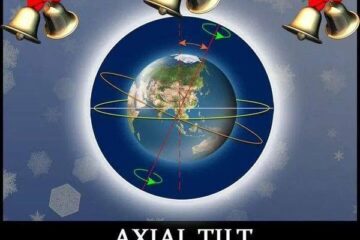
Why popular Christmas songs don’t mention Jesus
I can understand why Christians try so hard to claim a monopoly over Christmas: nothing about the holiday really speaks to Christianity. No, Christmas speaks to something much, much better.

Slowly, I’m working through the posts in our archive library like the Lone Ranger: Riding into town one day, fixing all its problems, and riding back out to the sunset afterward. I’ve got about 2200 posts to fix, and I’ll get to them all in time!
I can understand why Christians try so hard to claim a monopoly over Christmas: nothing about the holiday really speaks to Christianity. No, Christmas speaks to something much, much better.

Today, in our very last Lord Snow Presides, we watch the wheel turn from the old to the new once again.
Tim Keller’s claims about ‘original Christianity’ are quite common in his end of the religion. Here’s why.
I often mis-say specific words. I know the word I want and I’m thinking of the right thing at the time, but the wrong word consistently pops out. It turns out there’s a term for this situation: semantic paraphasia. Today, Lord Snow Presides over our brains — and the stuff we literally can’t help sometimes.
Lord Snow Presides over the unique way that knowing how to describe something can help us frame problems—and solve them.
It’s very easy for Christians to ignore Jesus’ direct orders, and even easier to latch onto conspiracy theories about the number 666.
Hell, in The Great Divorce, encourages humans to be humans—while Heaven only wants robots devoid of everything that makes humanity sparkle.
When Christians write parables or allegories, they never worry about their characters not acting like people at all. That’s not the point of the story. The story is meant only as a framework to use to defeat strawmen.
When we checked out Josephus recently, a contemporary of his emerged from the shadows: Justus of Tiberias. We don’t know much about him, which is strange considering what he could have had to say about the earliest Christians. So today, let’s check out Justus of Tiberias — and marvel at the mystery surrounding his absence from the record.
Today, our focus rests upon Gaius Plinius Secundus, more popularly known as Pliny the Elder. As he lived between 23/24 CE – 79 CE and was good friends with Emperor Vespasian (who ruled from 69-79 CE), he was very well-placed to know all about this stuff. Let’s see if he did.